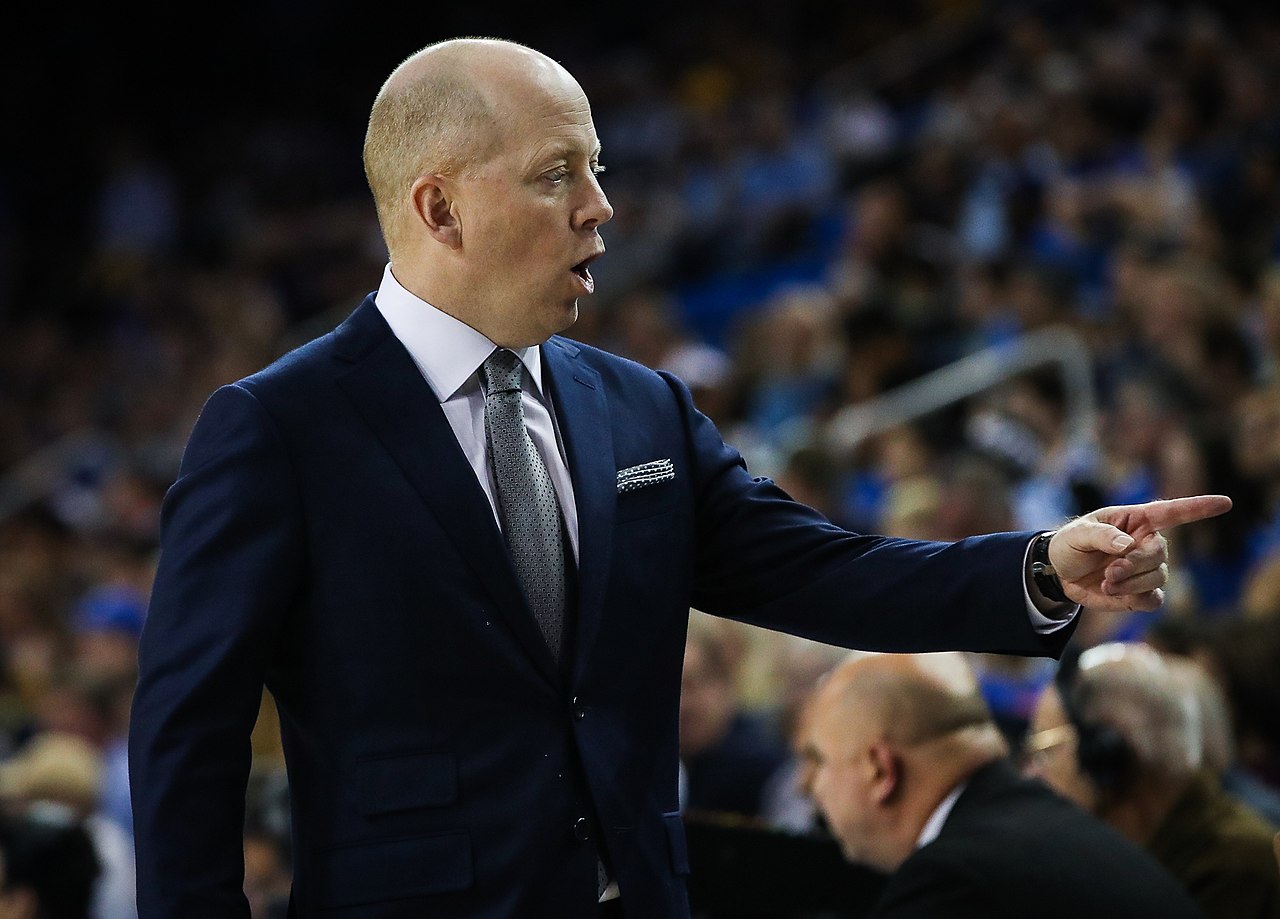
Mick Cronin's Height: Unveiling the Intrigue of the UCLA Coach
In the highly competitive and physically demanding world of college basketball, where towering athletes command the court, the figure of the head coach often stands as a beacon of strategy, leadership, and unwavering passion. Among these revered mentors, Mick Cronin, the esteemed head coach of the UCLA Bruins, has carved out a formidable reputation for his tactical genius and fiery sideline presence. While his coaching prowess is undeniable, a subtle yet persistent question often surfaces among fans and analysts alike: what about Mick Cronin's height?
This seemingly trivial detail, far from being inconsequential, actually adds a layer of human intrigue to a coach whose impact transcends mere physical dimensions. It's a question that speaks to our natural curiosity about public figures, especially those who achieve significant success in fields often associated with certain physical archetypes. For a deeper dive into this fascinating aspect, you might be interested in Mick Cronin Height: Why Fans Wonder about the Respected Coach. Let's explore the background of this respected figure and understand why his stature, or the curiosity around it, becomes part of his unique narrative.
From Cincinnati Courts to College Coaching Stardom
Mick Cronin's journey to the pinnacle of college basketball coaching is a testament to dedication and an innate understanding of the game. Born on July 17, 1971, in Cincinnati, Ohio, his passion for basketball was ignited at a young age, nurtured by countless hours spent with his father and brother on local courts. This early immersion in the sport laid the groundwork for a lifelong commitment that would eventually lead him to one of the most storied programs in the nation.
Cronin honed his skills not just as a fan, but as a player himself. He attended La Salle High School in Cincinnati, where he excelled as a point guard for the school's basketball team. This position is particularly telling, as a point guard is often the on-court general, requiring exceptional court vision, leadership, strategic thinking, and the ability to dictate the flow of the game, regardless of physical stature. His skills and leadership qualities earned him multiple accolades during his high school career, offering early glimpses into the strategic acumen and competitive spirit that would later define his coaching philosophy. This foundation, built on understanding the game from a player's perspective, especially one that emphasizes skill over sheer size, proved invaluable as he transitioned into coaching. For more on his playing days and transition, consider reading Mick Cronin's Height: From Point Guard Past to UCLA Coaching.
The Weight of a Legacy: Mick Cronin's Arrival at UCLA
The transition to coaching the UCLA Bruins marked a pivotal moment in Mick Cronin's career, placing him at the helm of a program steeped in unparalleled history. For years, Cronin admitted to lying in bed, watching UCLA basketball games and pondering how he would coach the Bruins if he ever got the chance. That chance arrived, and with it, an acknowledgment of the immense responsibility of being in charge of "the House That Wooden Built."
During his introductory news conference at Pauley Pavilion, Cronin stood before a bevy of former UCLA players and boosters, expressing a sense of being "a bit overwhelmed" but quickly asserting his readiness: "But trust me, I'm prepared." Athletic director Dan Guerrero presented Cronin with a UCLA jersey featuring No. 1 and his name. In a gesture that immediately endeared him to the Bruin faithful, Cronin turned the jersey to show the front for photographers, declaring, "The four letters are more important than my name." This statement, met with applause, perfectly encapsulated his understanding of the program's storied legacy and the collective identity it represents.
Navigating a High-Stakes Search
Cronin's appointment followed a somewhat bumpy coaching search that lasted just over three months. The Bruins had initially pursued Texas Christian's Jamie Dixon, but couldn't reach a deal due to his substantial $8 million buyout. They then turned their attention to Tennessee's Rick Barnes, but again, terms couldn't be met. Bob Myers, the Golden State Warriors general manager and a former Bruin who was part of the search committee, described the process as planting "seeds in various places and see what flourishes." He emphasized that the UCLA job "takes some courage. The expectations here are at the highest level."
Despite the challenges of the search, Guerrero affirmed that Cronin was on the committee's radar from the start. "From the moment we met Mick, he conveyed a strong desire to be here," Guerrero stated. "He wants to be here to win national championships, something that we all desire." This desire resonates deeply with UCLA's history, which boasts an incredible 10 national championships under the legendary John Wooden, including an unprecedented seven in a row. The program has added one more title since Wooden's era, in 1995, setting a remarkably high bar for any coach.
Cronin, ever the realist, acknowledged these expectations head-on: "It's UCLA, I understand the expectations. You think fans want to win, try being the coach that doesn't sleep. We want to win more." This unwavering commitment to excellence and understanding of the program's history was further highlighted by Myers, who recalled that during his four-year playing career, the Bruins won the conference title three times and made an Elite Eight appearance. Yet, he said, "We didn't care. Actually, we were trained to not care. In our eyes that was nothing to celebrate." This anecdote powerfully illustrates the championship-or-bust mentality ingrained at UCLA, a challenge Cronin eagerly embraced.
His introduction was a gathering of basketball royalty, with former Bruins like Jamaal Wilkes and Mike Warren (both played for Wooden), along with Tracy Murray, Kris Johnson, and Sean Farnham, in attendance. Even former Bearcats players Kenyon Martin and Ron Allen came to show their support, underscoring the respect Cronin commands across the basketball landscape.
Beyond Stature: The True Pillars of Coaching Success
The persistent question about Mick Cronin's height serves as a fascinating counterpoint to the actual metrics of coaching success. In a sport where inches and physical prowess are meticulously measured for players, a coach's true impact lies in an entirely different set of attributes. For Cronin, like many highly effective coaches, his leadership is defined by qualities far more profound than physical stature:
- Strategic Acumen: Cronin is renowned for his meticulous game planning, astute in-game adjustments, and ability to exploit opponents' weaknesses while maximizing his team's strengths. His defensive schemes, in particular, are often lauded for their effectiveness.
- Unwavering Passion and Intensity: His sideline demeanor is a clear indicator of his deep commitment to the game and his players. This passion is contagious and a powerful motivator.
- Exceptional Preparation and Work Ethic: Success at the elite level of college basketball is built on countless hours of film study, recruiting, practice planning, and player development. Cronin's dedication in these areas is unquestionable.
- Player Development and Motivation: Beyond tactics, a great coach inspires and molds young athletes, helping them not only improve their skills but also grow as individuals. Cronin has a proven track record of getting the best out of his players.
- Resilience and Mental Fortitude: The demands of coaching are immense, involving intense scrutiny, pressure, and the inevitable ups and downs of a season. Cronin's ability to maintain focus and drive, even through adversity, is a hallmark of his leadership.
His background as a point guard likely honed many of these non-physical skills, emphasizing the cerebral aspects of basketball over pure athleticism. For aspiring coaches or even leaders in any field, Cronin's career offers a compelling lesson: true influence is rarely a matter of physical dominance. Instead, it's forged in the crucible of intellect, character, and an unyielding commitment to excellence. The intrigue around Mick Cronin's height becomes less about a measurement and more about the curiosity surrounding a man who, despite not fitting a traditional "tall" athletic mold, exerts an outsized influence on his sport.
The Enduring Intrigue and Cronin's Lasting Impact
In conclusion, while the question of Mick Cronin's height may continue to pique curiosity, it ultimately serves to highlight the much more significant aspects of his career: his profound expertise, his unwavering dedication, and his remarkable ability to lead and inspire. His journey from a young point guard in Cincinnati to the head coach of one of college basketball's most iconic programs is a testament to the fact that genuine impact is measured not in inches, but in championships, player development, and the respect earned through relentless effort. Cronin's story reinforces the idea that in the world of coaching, true stature is built upon a foundation of strategy, passion, and an unyielding will to win, solidifying his legacy as a respected and influential figure in the sport.